Learning about Technological Pedagogical Content Knowledge (TPACK)
framework has been enlightening for me as I visit the many sites created and maintained by Dr. Punya Mishra & Dr. Matthew Koehler the TPACK wiki, TPACK 101, All things TPACK, collaborative and separate projects, publications, and shared information.
What are the opportunities to observe, measure, inquire about TPACK in schools that have integrated Google Apps Education Edition beyond NY IS 339's Dot-to-Dot: A Global Learning Reception and Prince George's County Public Schools PGCPS has been Googlized and Oregon Department of Education announcement for statewide option for GAEE? While Mishra & Koehler continue to provide TPACK learning opportunities in higher education, what about the TPACK levels of those involved in schools that adopt Google Apps Education Edition or when students become the teachers?
Just a few links from my Internet connections and RSS feeds:
Drape's Takes When Students Become Teachers Become Students
Sylvia Martinez Generation YES Students teach tech to Superintendents
Fred Wilson A VC in NYC Let The Students Teach
Vicki Davis Cool Cat Teacher Teach Students to Teach Themselves
Edutopia Students Teach Technology to Teachers
Project Tomorrow Students Speak Up
Pew Internet & American Life Projects Technology User Types
PBS. Digital Nation How Google Saved a School
NY IS 339's Dot-to-Dot: A Global Learning Reception (2009)
NY IS 339's Dot-to-Dot: A Global Learning Reception (2010)
I tend to learn something from everything and everyone I encounter...good, bad, or indifferent but in the world where the arguments still continue about who is in charge, who is in control, while budgets are being cut not just in education but also in technology (and other career fields), many educational and learning sites are blocked, and many schools still lack basic technology...learning is still taking place. Can you imagine graduating high school in 2010 and never accessed the Internet to learn? Well it is still a reality.
The 2010 National Educational Technology Plan (NETP), 2004 NETP and other NETP archives are available through the net, what are the lessons learned? What lessons learned are in available in the practical application? For the educators, technology integrationists, students, self directed learners and many individuals who are returning to higher education and continue to share knowledge, a heartfelt thanks from this lifelong learner. While I cannot thank everyone in my P4LN*, know that whatever you post in cyberspace may impact a learner somewhere, sometime, and/or somehow.
After an intense 2 weeks of research and homework I just needed to post some of the ideas that have resurfaced as I review and assess the reasons why I am on this doctoral journey and compare, contrast, and align information while trying to maintain priorities and responsibilities of life beyond being a student.
So is anyone researching TPACK in schools that have implemented Google Apps Education Edition?
Comments, recommendations, or checks in the reaction boxes are welcome.
P4-Personal, Professional, Perpetual, Persistent
Related posts:
Consolidating References (09/2009)
Consolidating More References (11/2009)
Research Topic Ideas (10/2009)
Saturday, May 22, 2010


Saturday, May 8, 2010
Are you a paragon of pedagogical prodigiousness? Or do you settle?
Do you settle for sensible solutions for our people and our times? Are you sharing knowledge to build stronger fishnets, improved plows, and better yeos?
Or do you hear the trumpet fanfare as you perpetuate your Noble (or mobile) kingdom of learning in your role as the Laudatory Lord or Leading Lady of Learning and as paragons of pedagogical prodigiousness?
For those who know me...the 21st century label, title, category sticks in my craw but I adapt, implement, and overcome (AIO). I came across this book in the recommended readings for my account, 21st Century Skills: Learning for Life in Our Times in Books 24x7 through AKO (What is Army Knowledge Online?). 21st Century Skills: Learning for Life in Our Times is also available with a limited preview through Google Books.
While there are many interesting points in the book, the sidebar of the novel, The Once and the Future King caught my attention in the Kingdom of Learnalot, Kingdom of Learning, Software & Hardware Guilds, Sir Ludd & the Luddites, Laudatory Lord & Leading Lady of Learning, Paragons of Pedagogical Prodigiousness and King Wallace's closing statement, “‘Tis time to return to your plans my dearest—stronger fishnets for the fishermen, improved plows for the plowmen, better yeos for the yeomen— sensible solutions for our people and our times.
Chapter 4: Digital Literacy Skills—Info-Savvy, Media-Fluent, Tech-Tuned opens with this quote, "It is no longer enough simply to read and write. Our children must learn how to spot a stereotype, isolate a social cliché, and distinguish facts from propaganda, analysis from banter, and important news from coverage". —Ernest Boyer, past president, Carnegie Foundation for the Advancement of Teaching
Read The Once and the Future on beginning on page 62
As the story ends:
King Wallace turned to his Queen. “Alas, my Lady, you were right all along. We are not in the least ready for the great Knowledge Age or the noble Learning Society.
“‘Tis time to return to your plans my dearest—stronger fishnets for the fishermen, improved plows for the plowmen, better yeos for the yeomen— sensible solutions for our people and our times."
“Perhaps, my dear, one fine day in the far-off future, there will come a time when learning is truly king.”
“And queen,” added Her Highness.
Do you settle for sensible solutions for our people and our times? Are you sharing knowledge to build stronger fishnets, improved plows, and better yeos?
Or do you hear the trumpet fanfare as you perpetuate your Noble (or mobile) kingdom of learning in your role as the Laudatory Lord or Leading Lady of Learning and as paragons of pedagogical prodigiousness?
Comments, recommendations, and/or checks in the reaction box are always welcome.
Monday, April 19, 2010
Tech Sharing Certs for School Nurse, Teacher Appreciation Week and Mother's Day
With many people looking to give meaningful gifts without breaking budgets here are a few certificates that you can use or modify for your tech sharing event for upcoming School Nurse Appreciation Day, Teacher Appreciation Week and Mother's Day. Many children want to give but may not know what to give...so the gift of your time can be memorable especially when sharing techspertise.
These are created in Google Docs and you can create a copy and print or tailor to your needs. Be creative and give the gift of your time and share techspertise amongst each other.
No tech in the classroom or at home? Meet at the local library, introduce people to members of your PLN, show someone how to make that digital clock to quit blinking, challenge others to explore menu bar options, share tips on recycling tech, enjoy a Google video chat or Skype conversation.....fill in the blank with your idea. Tech skills are as diverse as the tools available...why not help someone learn something new...or be willing to let someone show you what they have learned.
Teacher Appreciation Technology Sharing Gift Certificate
These are created in Google Docs and you can create a copy and print or tailor to your needs. Be creative and give the gift of your time and share techspertise amongst each other.
No tech in the classroom or at home? Meet at the local library, introduce people to members of your PLN, show someone how to make that digital clock to quit blinking, challenge others to explore menu bar options, share tips on recycling tech, enjoy a Google video chat or Skype conversation.....fill in the blank with your idea. Tech skills are as diverse as the tools available...why not help someone learn something new...or be willing to let someone show you what they have learned.
School Nurse Technology Sharing Gift Certificate
Teacher Appreciation Technology Sharing Gift Certificate
Mother's Day Technology Sharing Gift Certificate
Enjoy...and feel free to share how you used the certificates. Thanks to all of you (1300+) who have used these tech sharing certs with others.
Comments, recommendations, and/or checks in the Reaction boxes are welcome.
Sunday, April 18, 2010
APA, MLA, Chicago, Harvard, Turabian, Vancouver
What do these mean to you? APA, MLA, Chicago, Harvard, Turabian, Vancouver/ICJME
Depending on your role or roles, as a learner, educator, reviewer, editor, the objective of your writing, the standards will vary. Always consult the organization for the exact formatting and punctuation guidelines. While many people have personal preferences, individuals in school must meet organizational standards. Do you use one standard for work and another for school? Which format and version are you comfortable with APA (6th), MLA, Chicago (15th), Harvard (18th), Turabian (6th), Vancouver/ICJME? If you had to change formats or versions could you adapt, implement, and overcome?
 Someone asked me when did I learn the difference and in reflection I had to say once I started college. But today's student has to be able to write for school, produce resumes in various formats, take notes and they do it with different tools. Some people still prefer pen and paper version and others have gone completely digital. Regardless of the tool, the writing project must meet a standard whether submitting for a grade, publishing for the web, and writing for personal and professional objectives.
So where did you learn your writing standards for school? work? How did you learn to format templates and references? How do you cite your references?
Some online libraries and reference sites provide options to export references for bibliographic management software, such as EndNote, ProCite, Reference Manager, RefWorks, EasyBib and BibTeX. While others prefer to format their own references. Do you have a favorite or a preference?

Citations are based on reference standards. Formatting rules can vary widely. The specific requirements or preferences of your reviewing publisher, classroom teacher, institution or organization should be applied.
Because I live, work, and study in perpetual ADDIE gerbil wheel, I hit the key points used to help others decide the framework of their assignments.
Evaluate - Don't just read the paper and run a spell check, ask peers, parents, children to review and comment, conduct a print or web preview to determine how the project will look to the reading audience.
When analyzing this information be reminded of Steven Covey's Habit #5, "Seek first to understand, then to be understood."
Comments, recommendations, and reaction box checks are always welcome.
Depending on your role or roles, as a learner, educator, reviewer, editor, the objective of your writing, the standards will vary. Always consult the organization for the exact formatting and punctuation guidelines. While many people have personal preferences, individuals in school must meet organizational standards. Do you use one standard for work and another for school? Which format and version are you comfortable with APA (6th), MLA, Chicago (15th), Harvard (18th), Turabian (6th), Vancouver/ICJME? If you had to change formats or versions could you adapt, implement, and overcome?
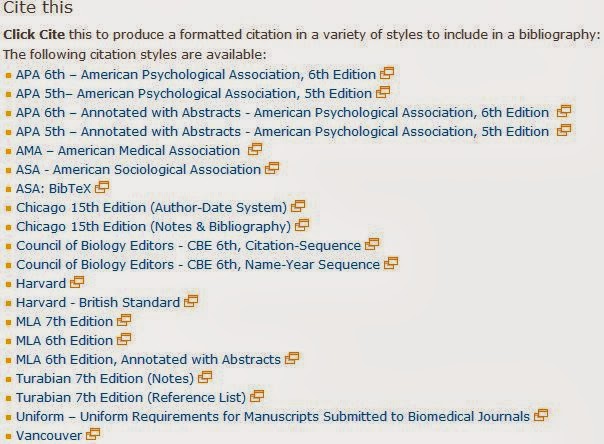
So where did you learn your writing standards for school? work? How did you learn to format templates and references? How do you cite your references?
Some online libraries and reference sites provide options to export references for bibliographic management software, such as EndNote, ProCite, Reference Manager, RefWorks, EasyBib and BibTeX. While others prefer to format their own references. Do you have a favorite or a preference?

Citations are based on reference standards. Formatting rules can vary widely. The specific requirements or preferences of your reviewing publisher, classroom teacher, institution or organization should be applied.
Because I live, work, and study in perpetual ADDIE gerbil wheel, I hit the key points used to help others decide the framework of their assignments.
Analyze your writing objectives and format requirements: APA, MLA, Chicago, Harvard, Turabian, Vancouver/ICJME
Design your template for your paper
Develop the content for your assignment or project
Implement - Combine the content, your research, references, and supplemental materialsDesign your template for your paper
Develop the content for your assignment or project
Evaluate - Don't just read the paper and run a spell check, ask peers, parents, children to review and comment, conduct a print or web preview to determine how the project will look to the reading audience.
When analyzing this information be reminded of Steven Covey's Habit #5, "Seek first to understand, then to be understood."
Comments, recommendations, and reaction box checks are always welcome.
Wednesday, April 14, 2010
Congratulations to Butler High School's Future Problem Solving Team!
Congratulations to Butler High School's Senior Division Team Problem Solving team for placing first in Team Problem Solving and in Individual Problem Solving FPSPI competition!
The BHS winning team members are: Quentin Mays, SaDarius Thomas, Michael White, and Stanley Esaw. Travis Moore is the individual winner.
If interested in sponsoring a Butler High School student for the trip, please contact Ms. Strelec at strelan@rcboe.org
For more information:
Butler High School, Augusta, GA
Future Problem Solving Program International (FPSPI)
Augusta Chronicle's article: Butler problem-solvers advance in competition Team will vie on international level By Stephanie Toone
While this article may not make front page news of the printed version of the Augusta Chronicle, the Internet allows us to share with others beyond the printed news and Augusta, GA.
Congratulations to all of the winning students.
From the Augusta Chronicle's article by Stephanie Toone: Butler problem solvers advance in competition
Future Problem Solving of America Senior Division Winners
- Butler High School, First place, Team Problem Solving
- Academy of Richmond County, Third place, Team Presentation of Action Plan
- Glenn Hills High School, Second place, Team Action Plan Development
- T.W. Josey High School, First place, Team Presentation of Action Plan
- Travis Moore, Butler High School, First place, Individual Problem Solving
- Alan Horner, Hephzibah High School, Second place, Individual Problem Solving
- Antonio Evans, Glenn Hills High School, Third place, Individual Problem Solving
Middle Division Winners
- Hephzibah High School, Third place, Team Problem Solving
- Westside High School, Second place, Team Problem Solving
Donations for the trip to Wisconsin can be mailed to:
Richmond County Board of Education
C/O Gifted Program
864 Broad Street
Augusta, GA 30901
Congratulations to all future problem solvers!
The BHS winning team members are: Quentin Mays, SaDarius Thomas, Michael White, and Stanley Esaw. Travis Moore is the individual winner.
If interested in sponsoring a Butler High School student for the trip, please contact Ms. Strelec at strelan@rcboe.org
For more information:
Butler High School, Augusta, GA
Future Problem Solving Program International (FPSPI)
Augusta Chronicle's article: Butler problem-solvers advance in competition Team will vie on international level By Stephanie Toone
While this article may not make front page news of the printed version of the Augusta Chronicle, the Internet allows us to share with others beyond the printed news and Augusta, GA.
Congratulations to all of the winning students.
From the Augusta Chronicle's article by Stephanie Toone: Butler problem solvers advance in competition
Future Problem Solving of America Senior Division Winners
- Butler High School, First place, Team Problem Solving
- Academy of Richmond County, Third place, Team Presentation of Action Plan
- Glenn Hills High School, Second place, Team Action Plan Development
- T.W. Josey High School, First place, Team Presentation of Action Plan
- Travis Moore, Butler High School, First place, Individual Problem Solving
- Alan Horner, Hephzibah High School, Second place, Individual Problem Solving
- Antonio Evans, Glenn Hills High School, Third place, Individual Problem Solving
Middle Division Winners
- Hephzibah High School, Third place, Team Problem Solving
- Westside High School, Second place, Team Problem Solving
Donations for the trip to Wisconsin can be mailed to:
Richmond County Board of Education
C/O Gifted Program
864 Broad Street
Augusta, GA 30901
Congratulations to all future problem solvers!
Sunday, April 11, 2010
Student Opportunities, ISTE NETS-S, Self-Assessment and Empowerment
Do you or your students visit the OPM Student opportunities site? This site allows students of all ages, in all levels of education to view the requirements and apply for jobs, internships, scholarships, fellowships, grants, and apprenticeships within the federal government. The jobs, internships, scholarships, grants, fellowships, and apprenticeships link to the educational opportunities available to students high school through doctorate level and career professionals.
Learning how to fill out applications for the different programs requires students of all ages to self assess their personal and professional achievements, collect information for human references, and learn how to write about their achievements while analyzing different application requirements and deadlines for each program.
The links below allow one to view the diverse opportunities available which they may not be aware of in or out of high school. Visit the site to review the opportunities from NASA, CIA, Departments of Agriculture, Education, Energy, Health and Human Services, Homeland Security, Veterans Affairs, FDIC, FCC, and many more.
Call to Serve - A joint initiative between the Partnership for Public Service and the U.S. Office of Personnel Management (OPM), is dedicated to helping you learn more about careers in the federal government. To date, more than 642 campuses and 75 federal agencies have joined together to form the Call to Serve network.
Additional opportunities for students (eScholar)
Jobs, Internships, Scholarships, Fellowships, Grants, and Apprenticeships
Federal Jobs by Major - A list of popular jobs filled by individuals with degrees. This list is not all inclusive and some job titles and fields are new to high school students whose environment, family, school choices may be limited. Great discussion opener for students who are thinking about future opportunities.
Student Temporary Employment Program (STEP) information
Student Career Experience Program (SCEP) information
Presidential Management Fellows Program and Application information - 2 year paid fellowship for graduate students.
Federal Career Intern Programs: Individuals interested in Career Intern opportunities must contact specific agencies directly. Today, 80 opportunities are listed under the Internship link, listed below are a few of the agency specific internship opportunities.
Department of Education
CDC Department of Health Promotion and Education
Congressional Hispanic Caucus Institute (CHCI) Congressional Internship Program
Congressional Black Caucus Foundation Congressional Internship Program - Summer, Communications, and Emerging Leaders
Exploring opportunities is a great way to help students empower themselves whether they are seeking local job opportunities or want to do great things in the world. When we listen to students discussing their dreams of what they want to do in life, one thing that is missing is their plan to achieve those dreams. Not all students attend resume writing workshops, career information seminars, or have encouragement from community members, and the OPM Student Opportunities site allows them to explore opportunities from their mobile devices, homes with Internet access, and local libraries with computer labs while learning to compile personal and professional information. While they are conducting self assessments, students may discover that they need to make different choices in their educational pursuits, become involved with community volunteer activities, and build their network of human references.
Encourage and challenge students to explore the requirements for a particular career field, internships, apprenticeships, cooperative learning, and scholarships. Exploring the diverse opportunities allows students to apply ISTE's NETS for Students: (1) Creativity and Innovation, (2) Communication and Collaboration, (3) Research and Information Fluency, (4) Critical Thinking, Problem Solving, and Decision Making, (5) Digital Citizenship, (6) Technology Operations and Concepts as independent learners.
FAQs:
What are the eligibility requirements?
Each program has different requirements. Most programs require that you actively pursue a degree, certification, or diploma. In addition, you need to be in good academic standing at your school, a U.S. citizen, and able to meet security requirements. Check specific programs for eligibility criteria.
What can you do when you create a USAJobs account?
Build and store up to 5 distinct resumes, save and automate job searches, save and apply for jobs, learn how to use USAJOBS, learn about the federal hiring process, discover special hiring programs, search by Agency, Occupation, Location, see which jobs are in demand, and apply to Federal Agencies.
Create an account here.
Already have an account? Sign in here.
Comments, recommendations, or checks in the reaction boxes are always welcome.
Learning how to fill out applications for the different programs requires students of all ages to self assess their personal and professional achievements, collect information for human references, and learn how to write about their achievements while analyzing different application requirements and deadlines for each program.
The links below allow one to view the diverse opportunities available which they may not be aware of in or out of high school. Visit the site to review the opportunities from NASA, CIA, Departments of Agriculture, Education, Energy, Health and Human Services, Homeland Security, Veterans Affairs, FDIC, FCC, and many more.
Call to Serve - A joint initiative between the Partnership for Public Service and the U.S. Office of Personnel Management (OPM), is dedicated to helping you learn more about careers in the federal government. To date, more than 642 campuses and 75 federal agencies have joined together to form the Call to Serve network.
Additional opportunities for students (eScholar)
Jobs, Internships, Scholarships, Fellowships, Grants, and Apprenticeships
Federal Jobs by Major - A list of popular jobs filled by individuals with degrees. This list is not all inclusive and some job titles and fields are new to high school students whose environment, family, school choices may be limited. Great discussion opener for students who are thinking about future opportunities.
Student Temporary Employment Program (STEP) information
Student Career Experience Program (SCEP) information
Presidential Management Fellows Program and Application information - 2 year paid fellowship for graduate students.
Federal Career Intern Programs: Individuals interested in Career Intern opportunities must contact specific agencies directly. Today, 80 opportunities are listed under the Internship link, listed below are a few of the agency specific internship opportunities.
Department of Education
CDC Department of Health Promotion and Education
Congressional Hispanic Caucus Institute (CHCI) Congressional Internship Program
Congressional Black Caucus Foundation Congressional Internship Program - Summer, Communications, and Emerging Leaders
Exploring opportunities is a great way to help students empower themselves whether they are seeking local job opportunities or want to do great things in the world. When we listen to students discussing their dreams of what they want to do in life, one thing that is missing is their plan to achieve those dreams. Not all students attend resume writing workshops, career information seminars, or have encouragement from community members, and the OPM Student Opportunities site allows them to explore opportunities from their mobile devices, homes with Internet access, and local libraries with computer labs while learning to compile personal and professional information. While they are conducting self assessments, students may discover that they need to make different choices in their educational pursuits, become involved with community volunteer activities, and build their network of human references.
Encourage and challenge students to explore the requirements for a particular career field, internships, apprenticeships, cooperative learning, and scholarships. Exploring the diverse opportunities allows students to apply ISTE's NETS for Students: (1) Creativity and Innovation, (2) Communication and Collaboration, (3) Research and Information Fluency, (4) Critical Thinking, Problem Solving, and Decision Making, (5) Digital Citizenship, (6) Technology Operations and Concepts as independent learners.
FAQs:
What are the eligibility requirements?
Each program has different requirements. Most programs require that you actively pursue a degree, certification, or diploma. In addition, you need to be in good academic standing at your school, a U.S. citizen, and able to meet security requirements. Check specific programs for eligibility criteria.
What can you do when you create a USAJobs account?
Build and store up to 5 distinct resumes, save and automate job searches, save and apply for jobs, learn how to use USAJOBS, learn about the federal hiring process, discover special hiring programs, search by Agency, Occupation, Location, see which jobs are in demand, and apply to Federal Agencies.
Create an account here.
Already have an account? Sign in here.
Comments, recommendations, or checks in the reaction boxes are always welcome.
Saturday, April 3, 2010
What are you really teaching? learning? sharing?
If you are lucky enough to work, volunteer, raise, and/or influence others...do you take the time to really listen to what they are saying? Can you hear what they are saying by their words, actions, or inactions?
When is the last time you conducted a self assessment on your progress? Are you the cobbler whose children have no shoes? Take some time and listen to your replacements. Listen to them as they ask for assistance, provide suggestions, and feel defeated when they watch the adults participate in the Blame Game.
What is your role in the Blame Game? Participant? Bystander? Blamer? Oxygen Thief? Mover? Shaker? Solution provider? Lead by example? Virtual Suggestion Box provider?
Parents, teachers, students, administrators, taxpayers, politicians, community apathy, oxygen thieves, self serving interest groups....you can add labels to the list but what is your role? At one point in time, from the womb to the tomb, you became a student in some type of learning system in life, either as an autodidact or a participant of a learning system whether it was a public / private / home / charter / magnet / virtual school system. Many people continue to learn long beyond the classroom and throughout life. You may own one or more labels, by choice or by association, but you started somewhere. You can continue as is or you can change.
The cycle continues until we break the cycle even if it is one person at a time. What are you doing to break the cycle of passive acceptance? How do you empower others who want to change? Regardless of your role by profession or self labeling by choice, your actions or inactions are being observed and modeled whether you realize or not.
Do your words, actions, digital or F2F match your actions?
Some quotes about change, listening, learning that have been brought to my attention by some of the young adults I volunteer with:
Those who initiate change will have a better opportunity to manage the change that is inevitable. William Pollard
Be a student so long as you still have something to learn, and this will mean all your life. Henry L. Doherty
A good listener tries to understand what the other person is saying. In the end s/he may disagree sharply, but because s/he disagrees, s/he wants to know exactly what it is s/he is disagreeing with. Kenneth A. Wells
When is the last time you conducted a self assessment on your progress? Are you the cobbler whose children have no shoes? Take some time and listen to your replacements. Listen to them as they ask for assistance, provide suggestions, and feel defeated when they watch the adults participate in the Blame Game.
What is your role in the Blame Game? Participant? Bystander? Blamer? Oxygen Thief? Mover? Shaker? Solution provider? Lead by example? Virtual Suggestion Box provider?
Parents, teachers, students, administrators, taxpayers, politicians, community apathy, oxygen thieves, self serving interest groups....you can add labels to the list but what is your role? At one point in time, from the womb to the tomb, you became a student in some type of learning system in life, either as an autodidact or a participant of a learning system whether it was a public / private / home / charter / magnet / virtual school system. Many people continue to learn long beyond the classroom and throughout life. You may own one or more labels, by choice or by association, but you started somewhere. You can continue as is or you can change.
The cycle continues until we break the cycle even if it is one person at a time. What are you doing to break the cycle of passive acceptance? How do you empower others who want to change? Regardless of your role by profession or self labeling by choice, your actions or inactions are being observed and modeled whether you realize or not.
Do your words, actions, digital or F2F match your actions?
Some quotes about change, listening, learning that have been brought to my attention by some of the young adults I volunteer with:
Those who initiate change will have a better opportunity to manage the change that is inevitable. William Pollard
Be a student so long as you still have something to learn, and this will mean all your life. Henry L. Doherty
A good listener tries to understand what the other person is saying. In the end s/he may disagree sharply, but because s/he disagrees, s/he wants to know exactly what it is s/he is disagreeing with. Kenneth A. Wells
Change is not made without inconvenience, even from worse to better. Richard Hooker
From Robert M. Hutchins:
The object of education is to prepare the young to educate themselves throughout their lives.
It must be remembered that the purpose of education is not to fill the minds of students with facts…it is to teach them to think.
Education is a kind of continuing dialogue, and a dialogue assumes different points of view.
My idea of education is to unsettle the minds of the young and inflame their intellects.
Do you step in to be one part of the solution for those who will eventually replace you? What are you really teaching, learning, and/or sharing?
From Robert M. Hutchins:
The object of education is to prepare the young to educate themselves throughout their lives.
It must be remembered that the purpose of education is not to fill the minds of students with facts…it is to teach them to think.
Education is a kind of continuing dialogue, and a dialogue assumes different points of view.
My idea of education is to unsettle the minds of the young and inflame their intellects.
Do you step in to be one part of the solution for those who will eventually replace you? What are you really teaching, learning, and/or sharing?
Comments or reaction box checks are always appreciated.
Friday, March 19, 2010
Don't forget to check yourself!
What? Check myself?
This post is not necessarily ed techie related...but a reminder to take a day or two to check your self...your basic health stats, a tune up for your body, a self reality check...so you can continue to share your knowledge, skills, and abilities with the rest of us. In the military, birth month checks were the reminder to make all of your required medical appointments in your birth month. So every January I make those appointments required to do the basic checks...except for last January because I was in transition. This year I picked it back up again...everything is good except for that annual head to toe skin review.
I understand that health care has the attention of many people this year, but in reality, everyone has a personal responsibility to their own health. In the long run, it is better to be proactive and educated about yourself, your family history, and lifestyle changes.
I have just had my 10th mole removed from my body. I have had this type of procedure in 4 different states, Alaska, Florida, Georgia, North Carolina. I will patiently await the results that will hopefully come back negative and return in 6 months for a follow up to review the annotated areas tagged for review. There is nothing like the question, "How long have you had this one?", when someone is looking at your backside from the top of your head to between your toes and you wonder when have I even looked for a mole there. So take the time to check yourself, if needed, take a picture and conduct a monthly check.
While we associate melanoma with skin checks, it can occur in the eye. This happened to the father of a friend of mine, who recovered with radiation.
Here is the ABCD reminder when checking your skin for possible features that might be symptoms of melanoma:
Asymmetry: One half of the abnormal area is different from the other half.
Borders: The lesion or growth has irregular edges.
Color: Changes from one area to another, with shades of tan, brown, or black or sometimes white, red, or blue. A mixture of colors may appear within one spot.
Diameter: The trouble spot is usually, but not always, larger than 6 mm in diameter-about the size of a pencil eraser.
So take a moment for yourself...for your health...and check yourself and your family history. Without your health...your unique ed technieness will depart before you have the time to share your knowledge, skills, and abilities with the rest of us.
As always, comments and recommendations are welcome or you can click on one of the reaction buttons below this post.
Links of interest:
Google Health: Melanoma
US National Institutes of Health National Cancer Institute - Melanoma
Mayo Clinic - Melanoma
This post is not necessarily ed techie related...but a reminder to take a day or two to check your self...your basic health stats, a tune up for your body, a self reality check...so you can continue to share your knowledge, skills, and abilities with the rest of us. In the military, birth month checks were the reminder to make all of your required medical appointments in your birth month. So every January I make those appointments required to do the basic checks...except for last January because I was in transition. This year I picked it back up again...everything is good except for that annual head to toe skin review.
I understand that health care has the attention of many people this year, but in reality, everyone has a personal responsibility to their own health. In the long run, it is better to be proactive and educated about yourself, your family history, and lifestyle changes.
I have just had my 10th mole removed from my body. I have had this type of procedure in 4 different states, Alaska, Florida, Georgia, North Carolina. I will patiently await the results that will hopefully come back negative and return in 6 months for a follow up to review the annotated areas tagged for review. There is nothing like the question, "How long have you had this one?", when someone is looking at your backside from the top of your head to between your toes and you wonder when have I even looked for a mole there. So take the time to check yourself, if needed, take a picture and conduct a monthly check.
While we associate melanoma with skin checks, it can occur in the eye. This happened to the father of a friend of mine, who recovered with radiation.
Here is the ABCD reminder when checking your skin for possible features that might be symptoms of melanoma:
Asymmetry: One half of the abnormal area is different from the other half.
Borders: The lesion or growth has irregular edges.
Color: Changes from one area to another, with shades of tan, brown, or black or sometimes white, red, or blue. A mixture of colors may appear within one spot.
Diameter: The trouble spot is usually, but not always, larger than 6 mm in diameter-about the size of a pencil eraser.
So take a moment for yourself...for your health...and check yourself and your family history. Without your health...your unique ed technieness will depart before you have the time to share your knowledge, skills, and abilities with the rest of us.
As always, comments and recommendations are welcome or you can click on one of the reaction buttons below this post.
Links of interest:
Google Health: Melanoma
US National Institutes of Health National Cancer Institute - Melanoma
Mayo Clinic - Melanoma
Saturday, March 13, 2010
What does PLN mean to you?
What is a PLN? What are you talking about? What does it do for me?
Common questions when one mentions the acronym PLN or PLE, particularly around a group of digitally disconnected individuals.
This morning I retweeted (RT) a tweet sent out by Steven Anderson (@web20classroom) to support Beth Still's (@bethstill) Wallwisher project titled, "What My Personal Learning Network Means to Me":

At some point people acknowledge their personal/professional/perpetual/persistent learning networks (P4LN) or environments (PLE) but they may not share their Aha moment or give credit where credit is due.
On January 3, 2010 I blogged a "Thank you to my PLN" and created an ABCD award for them.
Want to learn more about PLNs and PLEs? There are so many links and resources available that I cannot list them all here...please feel free to leave a comment if you have published information on your experiences with PLNs and PLEs.
Please share your comments, recommendations, and links about your PLN/PLEs and don't forget to thank them.
Don't forget to visit Beth Still's Wallwisher project, "What My PLN means to me..."
Common questions when one mentions the acronym PLN or PLE, particularly around a group of digitally disconnected individuals.
This morning I retweeted (RT) a tweet sent out by Steven Anderson (@web20classroom) to support Beth Still's (@bethstill) Wallwisher project titled, "What My Personal Learning Network Means to Me":

At some point people acknowledge their personal/professional/perpetual/persistent learning networks (P4LN) or environments (PLE) but they may not share their Aha moment or give credit where credit is due.
On January 3, 2010 I blogged a "Thank you to my PLN" and created an ABCD award for them.
Want to learn more about PLNs and PLEs? There are so many links and resources available that I cannot list them all here...please feel free to leave a comment if you have published information on your experiences with PLNs and PLEs.
EDUCAUSE - "7 Things You Should Know about Personal Learning Environments" in their collection of 7 Things briefs.
Mohamed Amine Chatti's ongoing research on Technology Enhanced Learning blog post on PLE links with links to many other blog posts and articles.
However you reference your PLN/PLE, personal, professional, perpetual, persistent...or whatever adjective you use, it is yours, once you have learned it, applied it, the knowledge cannot be taken away from you...so enjoy it!
Thanks again P4LN for continuing to grow on my learning journey!
P4 - Personal, Professional, Perpetual, Persistent
Please share your comments, recommendations, and links about your PLN/PLEs and don't forget to thank them.
Don't forget to visit Beth Still's Wallwisher project, "What My PLN means to me..."
Sunday, March 7, 2010
What would you do? Response from RCSS...
During a recent assignment in Research Methods, self-reflection was required for one part of the assignment.
I am challenged during this course because many of the required reading assignments are in printed books...got it, no problem implementing the Adapt, Implement and Overcome attitude is something I can do. The required text books are in My Library using Google Books but the views are "No Preview Available" and "Limited Preview" and the books have some type of online supplement which are annotated in the notes. During the self-reflection process I came across a document that challenged me to return to school...again.
I believe this response from the Richmond County School System was the straw that catapulted me into grad school. What would you do if your school board responded to written questions like this? Were the questions to difficult? Isn't this information that anyone associated with a school should have access too? Have you encountered this type of response from the school board and school administrators? I followed RCSS protocol to appear on the agenda, had silent support from many parents, students, administrators, and educators but when the board meeting was adjourned, I had two principals ask me, "What are you going to do when the board doesn't respond?" At first I was shocked that school principals would ask me this but I responded that we will cross that bridge if/when we come to that point. I truly believed that the school board would answer all of the questions...I can remember being at Butler High School that day when the principal brought me the written response from the board...more than 60 days after the questions were submitted to the board.
When RCSS hired Dr. Dana Bedden, this document was presented to him during one of his first Meet and Greet sessions yet 3 years later no updates and the document resides in the public record of the RCSS repository.
So here it is from 2007...
Your comments on the response (or lack of) and whether or not it would have prompted you to do something or accept the status quo are appreciated...or select of the Reaction buttons below this post.
Saturday, February 27, 2010
What is Psychobiography?
So we have all heard of biographies and autobiographies but I was introduced to the term psychobiography.
William Todd Schultz has an entire site called Psychobiography. On this site you can discover what psychobiography is and is not, FAQs, influential persons, Schultz's publications, annual annotated bibliography, and supplemental links.
From Schultz's site, What is psychobiography?
Psychobiography is the analysis of historically significant lives through the use of psychological theory and research. Its aim is to understand persons, and to uncover the private motives behind public acts, whether those acts involve the making of art or the creation of scientific theories, or the adoption of political decisions. Some figures who have been the subject of a great number of psychobiographical books and articles include Hitler, Sylvia Plath, Freud, Jung, Gordon Allport, James Barrie, Gandhi, Luther, Marilyn Monroe, Abraham Lincoln, van Gogh, Clinton, Bush, and Saddam Hussein.
So have you read a psychobiography?
A Google Book search on psychobiography presented 1, 055 entries.
A search using Google Scholar on psychobiography produced 7,210 entries.
While this is not the type of qualitative research I will use during the dissertation process, it presents a term that I was not familiar with. Now I am looking for psychobiographies on Educational Technologists, any recommendations?
Comments are always welcome...if not select one of the Reaction check blocks.
Thursday, February 25, 2010
Implicit Association Test
Don't let the word test scare you...
How aware are you of your unconscious biases? When is the last time you assessed your biases?
The Implicit Association Test offers one way to probe unconscious biases.
UnderstandingPrejudice.org, is a web site for students, teachers, and other individuals interested in the causes and consequences of prejudice. This is one of many resources available in the supplements to the syllabus for the current course I am enrolled in for research methods.
This warning is posted on the website before you select the option to move forward:
Warning: This test has been taken more than one million times, and the results usually reveal some degree of bias. Your test results will include interpretations based on research done with more elaborate versions of this test. However, the parties who have contributed to this site make no claim regarding the validity of suggested interpretations. If you would rather not read these interpretations or risk discovering hidden biases, please do not continue.
Your results are for your knowledge, there isn't an option to send the results to a social media site or post to your blog...it is just you, your Internet connected device and the 2 fingers you use to respond. Depending on where you are in life the results may or may not surprise you. I shared this link with a few people who vocally claim they have no biases and could use a technological assessment.
So whether you take the Implicit Association Test or explore the Understanding Prejudice website, there are more than 2,000 links to prejudice-related resources, as well as searchable databases with hundreds of prejudice researchers and social justice organizations.
Comments are welcome...or just click one of the Reaction buttons.
How aware are you of your unconscious biases? When is the last time you assessed your biases?
The Implicit Association Test offers one way to probe unconscious biases.
UnderstandingPrejudice.org, is a web site for students, teachers, and other individuals interested in the causes and consequences of prejudice. This is one of many resources available in the supplements to the syllabus for the current course I am enrolled in for research methods.
This warning is posted on the website before you select the option to move forward:
Warning: This test has been taken more than one million times, and the results usually reveal some degree of bias. Your test results will include interpretations based on research done with more elaborate versions of this test. However, the parties who have contributed to this site make no claim regarding the validity of suggested interpretations. If you would rather not read these interpretations or risk discovering hidden biases, please do not continue.
Your results are for your knowledge, there isn't an option to send the results to a social media site or post to your blog...it is just you, your Internet connected device and the 2 fingers you use to respond. Depending on where you are in life the results may or may not surprise you. I shared this link with a few people who vocally claim they have no biases and could use a technological assessment.
So whether you take the Implicit Association Test or explore the Understanding Prejudice website, there are more than 2,000 links to prejudice-related resources, as well as searchable databases with hundreds of prejudice researchers and social justice organizations.
Comments are welcome...or just click one of the Reaction buttons.
Wednesday, February 10, 2010
Technology Sharing Valentine's Day Certificate
With Valentine’s Day just a few days away…why not share your passion for technology. A simple gift certificate that anyone can use. One hour of 1 to 1 technology sharing. You can tailor the certificate to the recipients' needs or your choice of what you want to share.
In December 2009, I shared a Technology Sharing gift certificate because I work with diverse groups of people who span the technology scale. So here is the Valentine's Day version:
Give one and pass one on to someone else to continue paying it forward. From sharing your favorite blogs to using a specific piece of hardware or software to teaching about personal security or demonstrating the power of your PLN (Professional / Personal Learning Network). From F2F (Face to Face) to virtual, using a local library or a favorite wi-fi spot, from cell phones to netbooks...it is all up to you.
Whether you consider yourself an experienced techie, a novice, or someone who doesn't know a computer mouse from a real mouse the certificate is here for your use, modify, and to continue giving, learning, and sharing. You can give the certificate to those who may need some additional attention outside of a group setting or give the certificate to a group who may want to learn something you want to share. Maybe you know someone that you want to learn from...give them the certificate and request 1 hour of their time.
You can tailor the certificate based on what you want to give. A gift of your time to share tech info and skills cannot be purchased but the results are priceless.
I would love to hear how you give your technology presence versus presents. As always, your comments are welcome.
Saturday, February 6, 2010
Do you practice Random Acts of Kindness?
Do you practice Random Acts of Kindness throughout the year?
Need a Random Acts of Kindness monthly calendar? Click here for the 2010 free monthly calendars.
What are you doing to celebrate Random Acts of Kindness Week?
Random Acts of Kindness Week February 15-21 2010
World Kindness Day November 13, 2010
World Kindness Week November 8-14 2010
Need more ideas?
Follow the RAK foundation on Twitter: @KindTimes
Check the Random Acts of Kindness site for:
Lesson Plans for all levels, elementary, community service, middle school, reading and writing, arts and crafts
Send and RAOK e-Card
Learn how acts of kindness impact your health
Submit your kindness idea
See the collection of inspirational quotes
How do you practice Random Acts of Kindness? Your comments are appreciated, your shared experience is priceless!
Saturday, January 9, 2010
What else are you doing with Google Books?
On July 17, 2009, I blogged about using Google Books for a variety of groups whether you are an educator, student, parent, employer, virtual book club participant, or an individual wanting to consolidate books they have read, wanted to read, or associate books with your digital profile.
As an adult student, I started building My Library in Google Books with required textbooks and some other books on my physical bookshelf. You can add notes and tags, and annotate if you loan out the book or if you find online supplements to your books.
Of the 3 textbooks required for my current course, Research Methods & Designs, one book has a partial preview in Google Books and the other two have no preview of the book available. In all the textbooks I have checked out from libraries, rented, borrowed, or purchased...somewhere in the front matter of the book is some type of data about online supplemental information. For the textbooks required for RSH9102E, all three textbooks have some type of online supplemental information, so I just added the links to the Notes section in each of the textbooks. Long after the course is over and after I graduate, my notes will be available to me or other individuals who review My Library.
While Google Books provides access to a virtual library of a multitude of books and magazine along with previews of books that agree to display content, if there is a book you want and the preview of the content is not available, links are provided to locate the book in a library or if you want to purchase the book. The link to Find in a Library provides many additional opportunities.
Selecting the Find in a Library option opens up a WorldCat link that displays libraries that have the book based on a designated (your choice) or an associated zip code (based on your Google profile). From there you can cite the book, email or share the link along with additional features of the book from reviews, local libraries, table of contents with links to the Library of Congress, and many other features.
You can follow Google Books on Twitter @googlebooks, subscribe to the Google Books blog, check out the Google Books history, read Google Books Facts and Fiction, or the Google Books Library Project.
What is the difference in the views of Google Books? Full, limited, snippet, or no preview available.
What are you doing with Google Books? Have you built your own library in Google Books? Share the link to your Google Books library or post a comment about your Google Books experience. As always comments are welcome.
Friday, January 1, 2010
Out with the old and in with the new
Happy 2010!
As many people are bringing in the new year in a variety of methods, some people are resolving to downsize by getting rid of things and supporting the old adage "out with the old and in with the new". One way to help others get rid of the old without removing the memory or the personal history is to integrate technology. Capture the personal memories, experiences, and history with the technology available today. This can be an individual, family, or community project and become a shared learning experience for all participants.
Maybe grandparents or parents are not the techsperts, but every family has at least one gadget girl or guy or self proclaimed social networking geek. Where do you start? Wherever you want. Tomorrow is not promised...so if you lost everything and everyone tomorrow, are there certain things you would want to share?
The knick knacks on the shelves...where did they come from? Why are they on the shelf? Do the knick knacks have more family history than what can be seen on the shelf? Why not spend some quality family time and capture the memories for the future?
Not everyone is ready to go public...so why not start a family blog? Not ready to share with the whole family? Start on the home computer. Use the KISS (Keep It Short and Sweet) method to empower the participants. Model or demonstrate your favorite sites or how you have created a piece of cyberspace for your personal history.
I broke 3 of my own picture frames and took it as a sign to scan the pictures. I moved many things that my mother has collected over the years. While I could explain some of the pictures to my daughter, I wondered...What if some of these knick knacks were displayed digitally with the history and personal memories associated with it?
I know my mother is not ready to be a public blogger...yet, she subscribes to blogs using RSS and even posts a comment when the mood strikes. She still journals with pen and paper. I know this blog post won't get her started but it may plant a seed.
If you do this with items for tax donations or high value items for insurance purposes...why not store the high value memories for posterity before a significant emotional event (SEE)? Turn the event into a significant emotional educational event (SEEE) for everyone.
If you have helped a family or community member downsize their things by integrating technology, please share your ideas, successes, and lessons learned.
Thanks to my PLN
As with any holiday, I always took time to show my daughter the importance of "Thank You" notes and remind her that if you do not thank the people who took the time and effort to do something for you...more than likely it will not happen again.
As a self directed long time learner, my personal learning network (PLN) and my personal learning environment (PLE) impact my perpetual and persistent learning. I learn from, in spite, or because of you...which includes you in my P4LN*. Some of you know who you are...and others will never know the impact they make or have made in someone's learning process.
Regardless of what you have shared and/or the platform you shared it through from a tweet, a link, a blog post, a comment, a book, actions or inactions, digital/virtual resources, support, and/or inspiration, recommendations, notice of corrections, know that you are appreciated and this is my virtual "Thank You" note in the form of an ABCD Award.
As a self directed long time learner, my personal learning network (PLN) and my personal learning environment (PLE) impact my perpetual and persistent learning. I learn from, in spite, or because of you...which includes you in my P4LN*. Some of you know who you are...and others will never know the impact they make or have made in someone's learning process.
Regardless of what you have shared and/or the platform you shared it through from a tweet, a link, a blog post, a comment, a book, actions or inactions, digital/virtual resources, support, and/or inspiration, recommendations, notice of corrections, know that you are appreciated and this is my virtual "Thank You" note in the form of an ABCD Award.
I have shared the link through Twitter for the public version of this shared Google document, so that you can create your own ABCD award and present it to those who are deserving. The ABCD Award is a simple and thoughtful way to recognize those who go "Above & Beyond the Call of Duty."
Want to learn more about PLNs and PLEs? There are a few links below but there are so many links and resources available that I cannot list them all here...please feel free to leave a comment if you have published information on your experiences with PLNs and PLEs.
EDUCAUSE - "7 Things You Should Know about Personal Learning Environments" in their collection of 7 Things briefs.
EduTech Wiki article on Personal learning environments.
Wikipedia provides a history of Personal Learning Environments.
Mohamed Amine Chatti's ongoing research on Technology Enhanced Learning blog post on PLE links with links to many other blog posts and articles.
However you reference your PLN/PLE, personal, professional, perpetual, persistent...or whatever adjective you use, it is yours, once you have learned it, applied it, the knowledge cannot be taken away from you...so enjoy it!
Thanks again P4LN for continuing and growing on my learning journey!
P4-Personal, Professional, Perpetual, Persistent
Please share your comments, recommendations, and links about your PLN/PLEs and don't forget to thank them.
Friday, December 18, 2009
Technology Sharing Gift Certificate
A simple gift certificate that anyone can use. One hour of 1 to 1 technology sharing. You can tailor the certificate to the recipients' needs or your choice of what you want to share.
From sharing your favorite blogs to using a specific piece of hardware or software to teaching about personal security or demonstrating the power of your PLN (Professional / Personal Learning Network). From F2F (Face to Face) to virtual, using a local library or a favorite wi-fi spot, from cell phones to netbooks...it is all up to you.
Whether you consider yourself an experienced techie, a novice, or someone who doesn't know a computer mouse from a real mouse the certificate is here for your use, modify, and to continue giving, learning, and sharing. You can give the certificate to those who may need some additional attention outside of a group setting or give the certificate to a group who may want to learn something you want to share. Maybe you know someone that you want to learn from...give them the certificate and request 1 hour of their time.
The certificate can be used for any holiday and you can tailor the certificate based on what you want to give. The certificate was created from one of the Holiday templates in Google Docs, Presentations, and Spreadsheets.
I would love to hear how you give your technology presence versus presents. As always, your comments are welcome.
Sunday, December 6, 2009
Reflection with some HS grads and how do we...
What have you done to break the cycle of passive acceptance?
When I returned to Augusta for a visit, some of my daughter's friends stopped by to check on G Mama Flo who was injured in a car accident and catch up on what we all have been doing.
I miss working with the students who I have so much hope for because they are our replacements and we relate on so many issues. Many of them were home for the holidays and stopped in to visit their former high schools and noticed many changes, from educators who have moved on to their personal diverse perspectives as alumni.
It was great to hear about those who have moved on to successful college experiences, military, or internships and to hear their hopes and dreams and those who have remained in Augusta and have fallen into what I call the "Disgusta Depression." Some of them had so many hopes and dreams during high school...plans for college, travel, fulfilling jobs and they seem to have petered out. It hurts my heart...because I left Augusta...for many reasons from focusing on my own educational endeavors and the dissertation process, career progression, experience life as an empty nester, and to fulfill a need to move every few years that became ingrained during my military career.
So how do we help them to break the cycle of passive acceptance? How do we empower these former students who seem to have lost their zest for life challenges, hopes, and dreams?
When I returned to Augusta for a visit, some of my daughter's friends stopped by to check on G Mama Flo who was injured in a car accident and catch up on what we all have been doing.
I miss working with the students who I have so much hope for because they are our replacements and we relate on so many issues. Many of them were home for the holidays and stopped in to visit their former high schools and noticed many changes, from educators who have moved on to their personal diverse perspectives as alumni.
It was great to hear about those who have moved on to successful college experiences, military, or internships and to hear their hopes and dreams and those who have remained in Augusta and have fallen into what I call the "Disgusta Depression." Some of them had so many hopes and dreams during high school...plans for college, travel, fulfilling jobs and they seem to have petered out. It hurts my heart...because I left Augusta...for many reasons from focusing on my own educational endeavors and the dissertation process, career progression, experience life as an empty nester, and to fulfill a need to move every few years that became ingrained during my military career.
So how do we help them to break the cycle of passive acceptance? How do we empower these former students who seem to have lost their zest for life challenges, hopes, and dreams?
Tuesday, November 24, 2009
Consolidating More References
I am consolidating references from recent assignments created during my last few classes. NCU will switch from APA version 5 to APA version 6 in January 2010, so the references are listed in a text format. Web sites, books, and articles are consolidated and this blog post will be used as I progress through the disseration phase. Any of the research/scholarly articles were found in many of the databases through NCU's library, referenced in the Research Strategies blog post and connections through Twitter.
This list is not all inclusive, simply a blog post with many references which may or may not be used in future assignments. Any of the books listed are also linked in my Google Books library if they are available in Google Books. Please feel free to comment and provide recommendations or improvements as you read through the post.
One of the fun things students are required to do in the dissertation process are Annotated Bibliographies and Literature Reviews. As always recommendations are welcome.
Evans, J. (2009). Congressional Briefing: Release of Speak Up 2008 National Findings. Project Tomorrow. Retrieved from: http://www.slideshare.net/ProjectTomorrow/release-of-speak-up-2008-national-findings
Georgia Department of Education. (2009). Report Cards 2007-2008 for Richmond County. Retrieved from: http://www.doe.k12.ga.us/ReportingFW.aspx?PageReq=102&CountyId=721&T=1&FY=2008
Google Apps for Education. (2009). What’s Included? Retrieved from: http://www.google.com/a/help/intl/en/edu/included.html
Google Apps for Education. (2009). Webinars, Case Studies, and Q&A Sessions. Retrieved from: http://www.google.com/a/help/intl/en/edu/resource_center.html
Google Apps for Education. (2009). Why Apps? Retrieved from: http://www.google.com/a/help/intl/en/edu/sell.html
Google For Educators. (2009). Google web search - classroom lessons and resources. Retrieved from: http://www.google.com/educators/p_websearch.html
Google Teacher Academy. (2009). Resources - tools. Retrieved from: http://sites.google.com/site/gtaresources/tools
Intermediate School. (2009). Dot-to-Dot: A Global Learning Reception. Retrieved from: http://sites.google.com/site/339dottodot/
International Standards for Technology Education (ISTE). (2009). National Educational Technology Standards (NETS). Retrieved from: http://www.iste.org/AM/Template.cfm?Section=NETS
PBS. Digital Nation. (2009). How Google Saved a School. Retrieved from: http://www.pbs.org/wgbh/pages/frontline/digitalnation/learning/schools/how-google-saved-a-school.html
Prince George's County Public Schools (PGCPS). (2009). PGCPS has been Googlized. Retrieved from: https://sites.google.com/a/pgcps.org/googlized/Home
Richmond County School System. (2008). Performance Review of Richmond County School System. Retrieved from: http://www.rcboe.org/www/rcboe/site/hosting/Daily%20Announcements/MGTSurvey.pdf
Windham, C. (2005). Father Google & Mother IM: Confessions of a net gen learner. EDUCAUSE Review, 40(5), 42-58. Retrieved from: http://www.educause.edu/EDUCAUSE+Review/EDUCAUSEReviewMagazineVolume40/FatherGoogleandMotherIMConfess/158005
Any additional recommended readings?
Saturday, November 14, 2009
Who is the family communication collaborator in your family?
Who is your family communications collaborator? When was the last time you updated your contact info?
Early this morning my mother was in a car accident. Not her fault and she was not scheduled to work today...just required to attend a mandatory meeting. First message was at 6 AM I could hear noises in the background but figured she was at her workplace and accidentally hit the phone to call me. The first words of the message were, "Do not drive home, just call J, I am OK, car is totaled." When I did speak to her for a minute, I could tell the pain medication was working.
I started with messages to family and friends telling them I would keep everyone updated but keep the calls to the minimum because she was in the emergency room. Thankfully, I have some awesome neighbors in Augusta (Thanks Ron and Dot). They went to visit my mother in the hospital, where she had been admitted but was out of the room for a cat scan. After she returned, they called me from her room and I could hear her in good spirits in the background. DD showed up later and took a picture. As promised, I did not post the picture for the world to see but did share it with a few family members who have data plans on their phones and email for those who do not.
So it turns out, she has a broken leg and a possible fracture in the C2 vertebrate. My mother is also the oldest of 14 children, so you can only imagine the number of family members. Using a variety of tools, we all seem to connect when one family member or another needs thoughts, prayers, recognition, and/or thanks...but you can imagine the diversity of options to contact everyone. Thankfully I have two proactive aunts (Thanks Aunt Laura & Aunt Lois) geographically separated but keep connected to multiple family members primarily through email or voice calls.
So between GMail w/Gchat and video, Twitter, blip.fm, Facebook, and minimum number of voice phone calls the message was distributed. When I looked at the various tools used I wondered, "Who is the family communications collaborator in your network? Who would have been left out of the information loop if only one method of communication was used? When was the last time you updated your family contact information with family, school, or place of employment?"
Saturday, November 7, 2009
Donors Choose $25 - What project should I donate to?
On September 19, 2009, Richmond County School System (RCSS) hosted a community summit on the issue of dropout prevention with a grant made possible by America’s Promise Alliance.
Everyone who attended received an email with an opportunity to complete a survey which in turn would provide attendees with a $25.00 Donors Choose credit to donate to a project.
I received my email and went to select a project in RCSS to donate the $25.00...but no educators in the RCSS have registered a project. So I sent an email to my school board member, the Superintendent, and finally the Public Information Director (PID). I also created the RCSS Dropout Prevention Ning and posted the same request there...Where is everyone donating the $25 Donors Choose credit?
The only response I received was from the PID stating he would look into it. So I am throwing the question to the net...the neighboring county has 2 projects, 17 projects from the schools I attended growing up, 80 projects in the county where my daughter attended HS in FL. Donors Choose has many projects and you can tailor the selection of projects using a multitude of options.
So where do I apply this $25 donation?
Everyone who attended received an email with an opportunity to complete a survey which in turn would provide attendees with a $25.00 Donors Choose credit to donate to a project.
I received my email and went to select a project in RCSS to donate the $25.00...but no educators in the RCSS have registered a project. So I sent an email to my school board member, the Superintendent, and finally the Public Information Director (PID). I also created the RCSS Dropout Prevention Ning and posted the same request there...Where is everyone donating the $25 Donors Choose credit?
The only response I received was from the PID stating he would look into it. So I am throwing the question to the net...the neighboring county has 2 projects, 17 projects from the schools I attended growing up, 80 projects in the county where my daughter attended HS in FL. Donors Choose has many projects and you can tailor the selection of projects using a multitude of options.
So where do I apply this $25 donation?
Subscribe to:
Posts (Atom)